Reception
Welcome to Reception
Our teachers are: Ms Edwards (Butterflies), Miss Nikolova (Grasshoppers), and Ms Hoque (Ladybirds)
EYFS Support Staff: Mrs Mead, Mrs Montoya, Mrs Hill, Ms Onayiga
We wish you a warm welcome back after the Summer half-term.
What We Are Learning
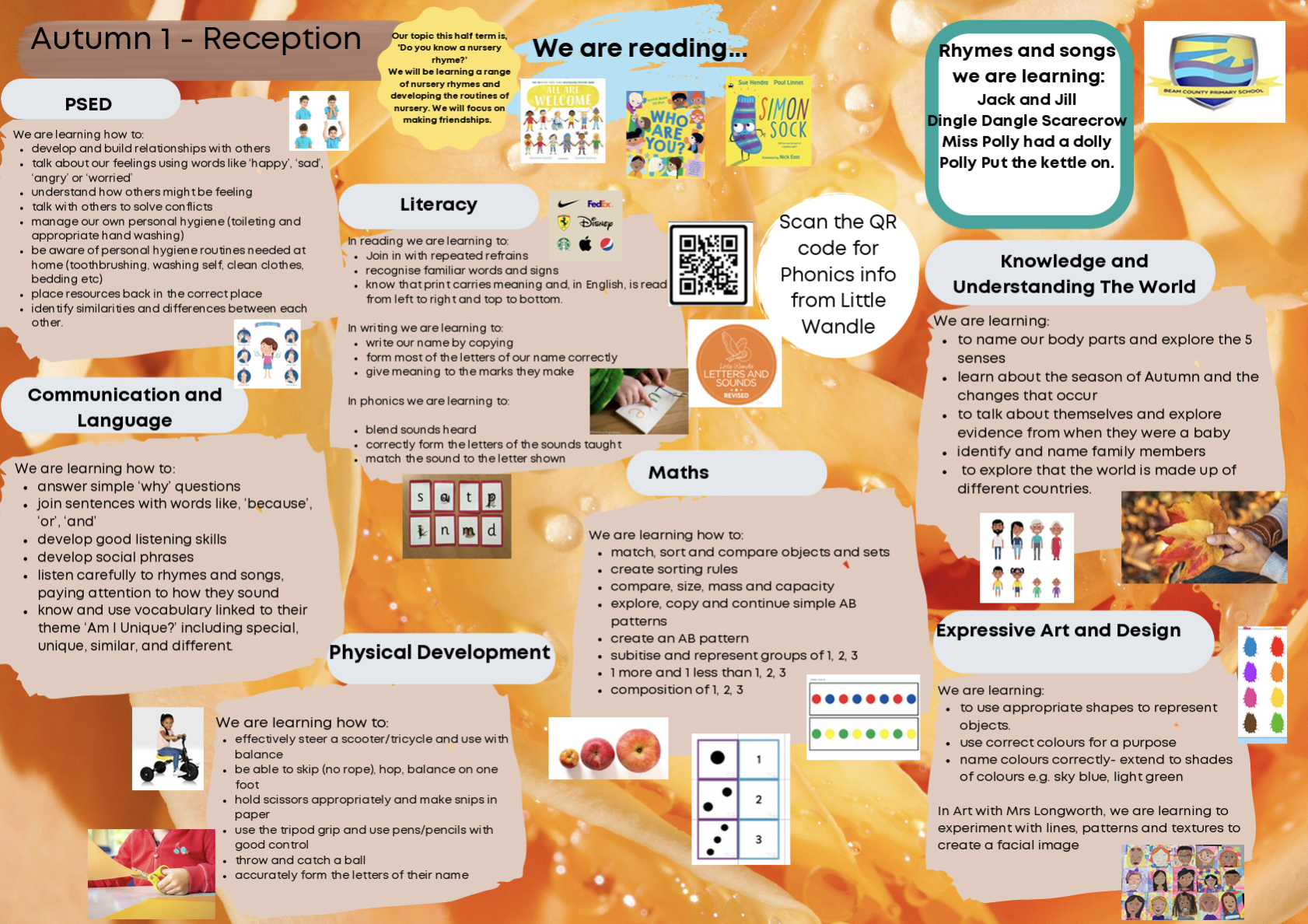
This term we are focusing on routines and transitions. Our children will consolidate their relationship skills, which will involve understanding themselves and others. They will also explore their senses to help them understand the world around them. The children will begin the Phase 2 phonics journey following the Little Wandle programme. We will also be focusing on building their fine motor skills. Alongside this, the children will match, sort, and compare.
Reading
Your child will be given weekly phonics home learning, which will be stuck in their planners (please bring these in every day). Towards the end of Autumn 1, your child will be given a phonics book. Please practise phonics sounds every day. Alongside this, your child will be able to take home a reading-for-pleasure book from our school library. This will be changed weekly.
PE
Wednesday morning for all classes
Key Dates, Trips and Events
Assessments
Reception Year Assessment
Throughout the Reception year, we carefully observe and assess children as they learn, play and develop across all areas of the Early Years Foundation Stage (EYFS). Pupils are assessed against developmental checkpoints within each area of the Early Years curriculum, enabling teachers to track children’s progress, identify their individual strengths and next steps, and ensure they are on track to achieve the Early Learning Goals (ELGs) by the end of the Reception year. Assessment helps us to identify where children may need additional support or challenge so that every child can make the best possible progress.
Reception Baseline Assessment (RBA)
At the beginning of Reception, children complete the Reception Baseline Assessment (RBA). This is a short, statutory assessment that takes place within the first six weeks of a child starting Reception.
The RBA provides a starting point for each child’s learning and development as they begin school. It focuses on early language, communication, literacy and mathematics skills and is completed in a supportive, child-friendly way.
The assessment is not something children need to prepare for and is not used as a test of what children can or cannot do when they start school. Instead, it provides a starting point from which children’s progress can be measured nationally.
Assessment Throughout Reception
Following the RBA, teachers continue to assess children through everyday observations, conversations, activities, play and their work. Assessment is an ongoing part of teaching and learning rather than a series of formal tests.
Our teachers use what they know about each child to plan appropriate learning opportunities, provide additional support where needed and offer challenge to help every child make progress.
Little Wandle Phonics and Reading Assessments
As part of our systematic approach to teaching early reading, children follow the Little Wandle Letters and Sounds Revised phonics programme.
Children's phonics and early reading development is assessed regularly, approximately every six weeks. These assessments allow teachers to check each child’s phonological and phonemic knowledge, including their ability to recognise and say sounds, blend sounds together to read words, recognise taught tricky words and apply their phonics knowledge when reading.
The assessments help teachers to identify children who may need additional practice or support and ensure that children continue to receive teaching at the appropriate level. Where necessary, additional catch-up and targeted support is provided so that children can build confidence and become increasingly fluent and independent readers.
Regular assessment also enables teachers to monitor progress closely and celebrate the development of each child’s reading skills throughout the year.
Early Years Foundation Stage Profile (EYFSP)
At the end of Reception, teachers complete the Early Years Foundation Stage Profile (EYFSP). This is a statutory assessment which provides a summary of each child’s development and achievement at the end of the EYFS.
Teachers make professional judgements based on their knowledge of each child and the evidence gathered throughout the year. Children are assessed against the 17 Early Learning Goals (ELGs) across the seven areas of learning:
- Communication and Language
- Personal, Social and Emotional Development
- Physical Development
- Literacy
- Mathematics
- Understanding the World
- Expressive Arts and Design
For each Early Learning Goal, teachers judge whether a child is meeting the expected level of development. Children who have not yet reached an Early Learning Goal will continue to be supported as they move into Year 1.
The EYFSP is not a test. It is a professional assessment based on what teachers know about each child and the skills they have demonstrated through their learning and everyday experiences.
What is a Good Level of Development (GLD)?
A child is considered to have achieved a Good Level of Development (GLD) when they have reached the expected level of development in the 12 ELGs covering the three prime areas of learning and the specific areas of Literacy and Mathematics.
It is important to remember that the GLD is simply a summary measure of attainment at the end of Reception. Every child is unique and develops at their own pace. Our priority is to ensure that every child is happy, confident and supported to develop the knowledge, skills and independence they need for their next stage of learning.
We work closely with parents and carers throughout the Reception year to celebrate children’s achievements, share their progress and identify how we can work together to support their continued development.
Useful Links and Resources
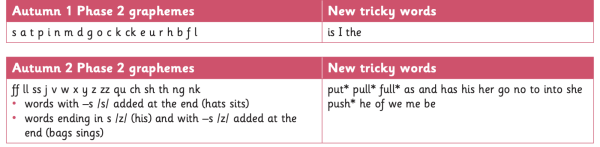
Reading - Little Wandle Programme progression
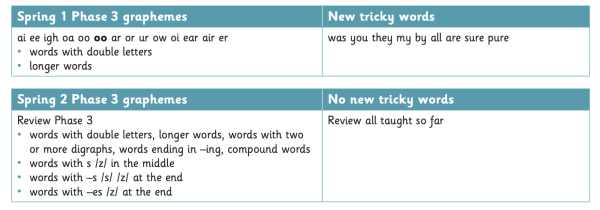
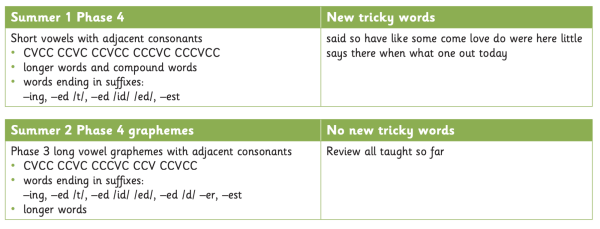
early years foundation stage profile assessment
These assessments are usually completed between April and June of the academic year in which your child turns 5 (usually the reception year). Please press here to read more information regarding the early years foundation stage profile assessment
Reception Baseline Assessments (RBA) Information
Below is information for parents and caregivers that explains what you need to know regarding the Reception Baseline Assessments (RBA), which are usually completed within the first 6 weeks of entering reception. Providing information such as:
- what each assessment involves,
- when tests will take place,
- how results will be shared and used
P.E uniform
All children are required to have a P.E uniform which stays in school and will be sent home at the end of every half term to be washed.
- Black shorts
- Plain white T-shirt
- Plimsolls for PE
- Bags with the school logo are available for £4.00
Reception Lunchtime
The children are starting to settle into Reception and are slowly getting used to our dinner hall.
With at least two options to choose from every day, the children are learning how to eat sensibly using a knife and fork and sitting amongst their new friends.
Please can we remind you that there is to be no chocolate, fizzy drinks or products that contain nuts.
The children have now started their full days at school and are enjoying ‘creating their lifelong love of learning‘ here at Beam County Primary School.
The children are displaying good levels of involvement whilst exploring their new classroom and the outdoor area. They have made new friends, and are adapting well to the new change in their routine.
During the next 6 weeks the children will be observed in their play in order for teachers to plan linked to the children’s interests and in order to develop their next steps in learning.
We will be focussing on helping the children to understand what makes them unique and special. We will be teaching name writing, drawing portraits and discussing about family life. Please feel free to send in family photos or photos of the children when they were a baby (ensure you label all photos with your child’s name please).
Please feel free to speak to a member of the team if you have any questions!
Maths
We are fantastic at subitising numbers to five so we have progressed beyond five now! We are counting from 0-20 confidently even managing it backwards. This term we have focused on different ways of making five, we call this number bonds to five. We are using different materials and pictures to do this such as Numicon, our fingers, double sided counters and even part-whole models.
Homework
Reception children will bring home a school library books and a different Little Wandle phonics book each week. This needs to be returned every day so that they can read in class with it in their reading groups. The purpose of the library book is as a ‘home sharing’ text. It is to develop children’s knowledge of different literature and increase their knowledge of the world.
Please get your child to read their own story books from home/be read to by parents on other week nights e.g., bed time story which allows children to have lots of exposure to modelling of tone, intonation, expression etc. Please record and sign all instances of reading that take place at home in their school diary/planner.
Maths homework
A1 - I can say the numbers from 0 to 5 and back from 5 to 0 in order
A2 - I can say the numbers from 0 to 10 and back from 10 to 0 in order
Sp 1- I can partition numbers, to 5, into two groups
Sp2 - I can say which number is one more or one less than a given number to 20
Su 1- I can count, read and write numbers to 20
Su 2 - I can say the numbers from 0 to 20 and back from 20 to 0 in order